
From Campfires to Conservation: A Rising Voice for Bats and Biodiversity
Long before she ever saw a bat up close, Maya Pendleton’s education in conservation had already begun under open skies and beside campfires in northern Utah. Growing up between a mountain range and the Great Salt Lake, she was immersed in nature from an early age. Family camping trips led by her grandfather, a former Forest Service ranger affectionately known as “Captain Jack,” were more than just family vacations. They were formative experiences that instilled a lifelong connection to the natural world.
“We would go off the beaten track and hang out for a week, chasing lizards and looking at desert flowers,” Pendleton recalls. “You don’t realize it at the time, but it ingrains in you at that age that nature equals fun.”
That sense of wonder, paired with a strong respect for nature, has led her to develop her passion for conservation biology. She said that her parents made it clear that nature wasn’t something to dominate, but something to coexist with.
“Nature deserves just as big of a spot in this world as we do,” she said.
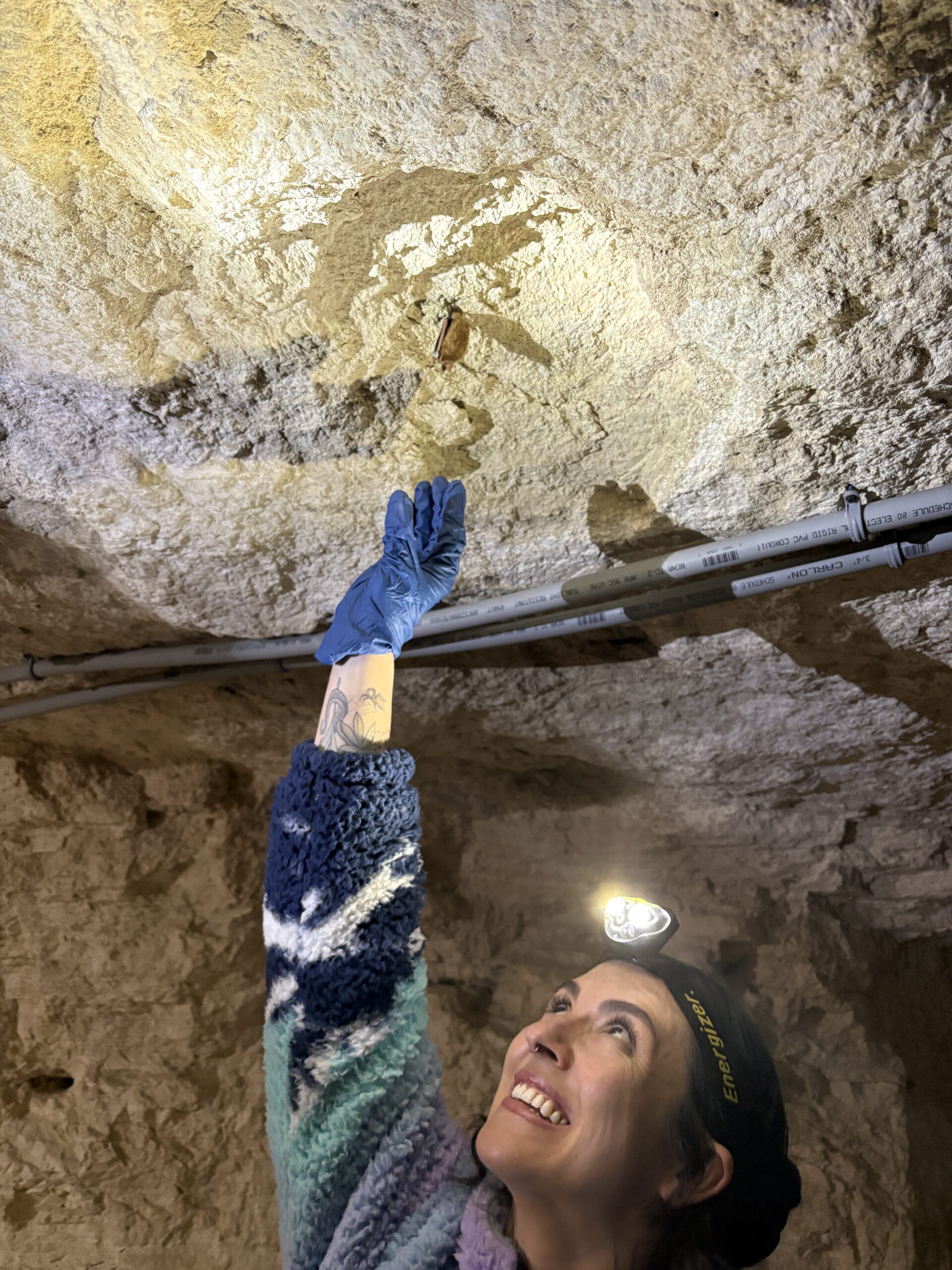 Pendleton is now a PhD student at South Dakota State University studying bats for an applied research project in the Wildlife and Fisheries Sciences program. As for many conservationists, her journey wasn’t linear. Pendleton considered becoming a veterinarian, then explored roles in education and zoo work. Along the way, she worked as a wildlife conservation technician with the Utah Division of Wildlife Resources helping track American white pelicans near the Great Salt Lake to help reduce aircraft collisions.
But it was during a public outreach event, her first “bat night,” that everything changed.
Standing beneath the night sky, helping researchers set up nets, Pendleton got to see her first bat up close: a Townsend’s big-eared bat. “They held it in front of my face, and I was just like, ‘Oh no, I’m so cooked,’” she said. “I was obsessed.”
She had no idea that this was just the starting point for her love of these little creatures.
Pendleton feels that bats are misunderstood animals, with misconceptions about rabies overshadowing their ecological importance. Fewer than 1% of wild bats carry rabies, and skunks and livestock have higher prevalence of rabies than bats.
Pendleton said that bats play a critical role in maintaining healthy ecosystems by consuming vast numbers of insects, including mosquitoes and agricultural pests, providing billions of dollars in natural pest control each year. They also pollinate plants and disperse seeds. Even a popular cocktail ingredient is reliant on bats.
“If you like tequila, you like bats because agave is pollinated by bats,” Pendleton said with a laugh.
Now conducting research in South Dakota, she is mapping the distribution and occurrence of bat species across the state and matching them with their habitat features. Her work is especially urgent due to bat population declines caused by white-nose syndrome, an invasive fungus that gets on bats as they’re hibernating.
“People don’t realize that bats reproduce very slowly, usually only one pup a year,” Pendleton said. “So, population losses can be devastating, which can impact human health.”
One species, the northern long-eared bat, has seen population drops of up to 97%, making it nearly impossible to find in some areas.
Since arriving at SDSU, Pendleton has revitalized the South Dakota Bat Working Group, led a contract with South Dakota Game, Fish and Parks to update the state’s Bat Management Plan, and co-authored multiple grants, including a successful $95,000 award from the South Dakota Army National Guard.
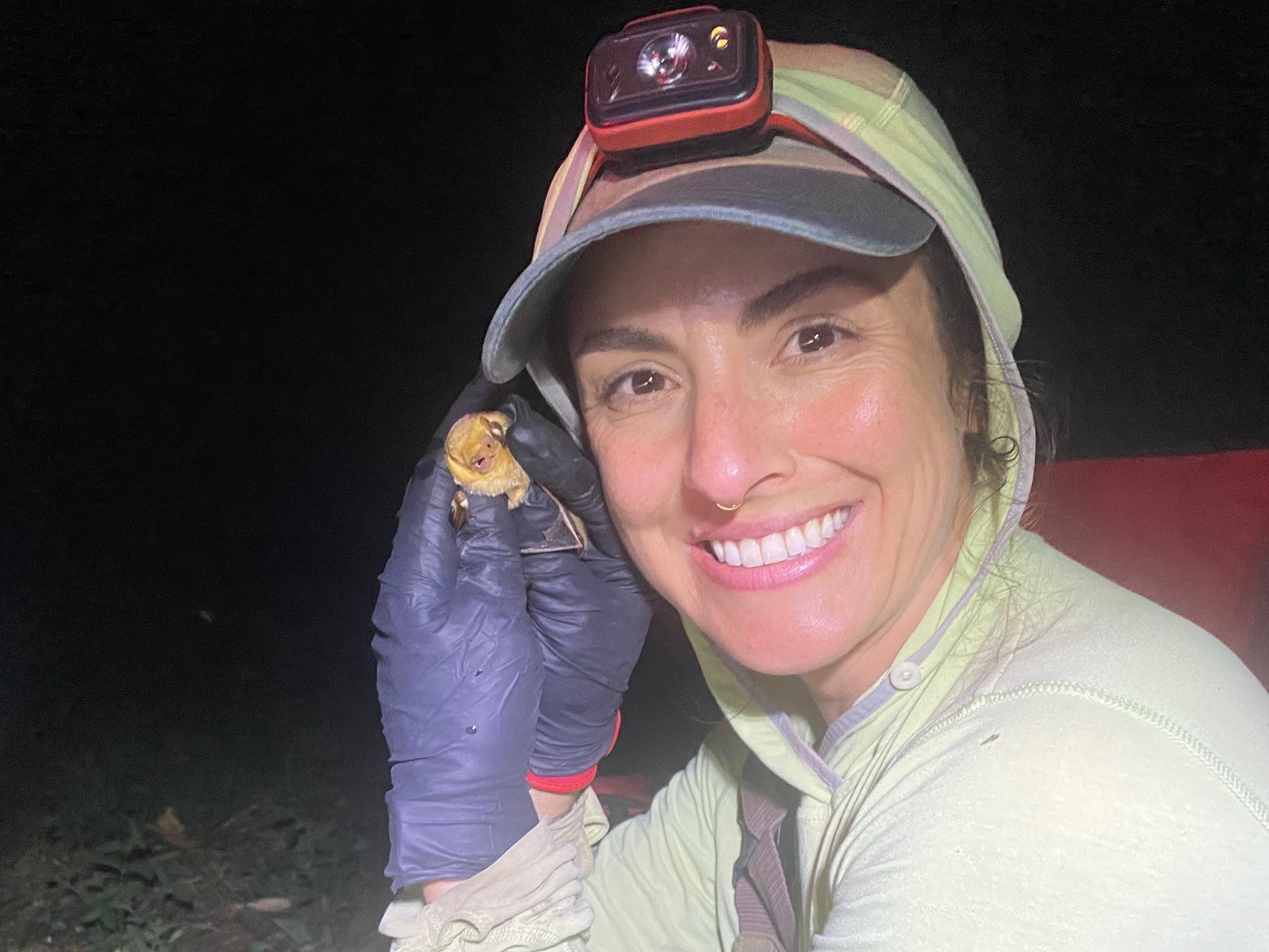 She said the National Guard reached out to her team and is interested in her work because they do a lot of different training in the Black Hills, where there are many bat species. They wanted to better understand what bats were on their property and in the Black Hills, and if any of them are endangered or close to being listed as endangered so they can make sure that their training doesn’t impact these bats or their habitats. They are also contributing data to her project and helping her map out the species on their properties.
By identifying where bats live and how they use the landscape, her work helps protect critical ecosystems while balancing human activity, part of her belief that nature and humans should coexist. She said that in the wildlife biology field, there is the concept of “one health,” meaning that the health of humans, wildlife and our environment are all connected.
“It has been shown time and time again that without a healthy environment, we do not have healthy people,” Pendleton said. “When one thing starts to go down, it affects everything else.”
Pendleton said that bat declines can lead to increased pesticide use, which in turn affects soil, water, wildlife, and ultimately human health. Protecting bats isn’t just about saving a species; it’s about safeguarding entire ecosystems and improving quality of life.
“In the grand scheme of things, the conservation of this one little thing might not feel that important, but it does lead to these cascading effects that then start to affect other organisms,” Pendleton said. “Which then starts to affect the whole system and we are part of that system.”
Pendleton said that there are many paths that lead to conservation work, but that for her, pursuing a graduate degree has provided a valuable opportunity to learn how to navigate challenges in wildlife conservation in a supportive environment with mentors who can guide her along the way. She also sees graduate school as an opportunity to build her own project, explore new questions, form meaningful collaborations, and gain hands-on experience in the field.
“Graduate school pushes you to think critically, develop new skills, and step outside your comfort zone. It fosters a deeper appreciation not only for the natural world, but also for the people working tirelessly in conservation, often driven by passion and dedication,” Pendleton said.
Beyond her research, she is driven by a desire to reconnect people with nature. In a world increasingly shaped by screens and technology, she encourages others to slow down and observe the diversity of nature.
“Be curious,” Pendleton said. “Look more, listen more, be patient.”
It’s a simple message, but fostering that curiosity, just as her family did for her, may be the key to building a future where conservation is not an afterthought, but a shared value.
From a child exploring the deserts of Utah to a scientist shaping the future of bat conservation, Pendleton’s journey is a reminder that meaningful change often begins with a single moment of wonder and grows into a lifelong commitment to protecting the world we all share.